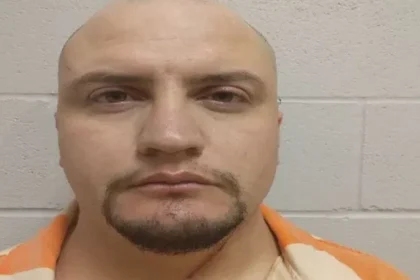






Most people who search for Kenneth Pinyan encounter a flood of sensationalized accounts, unverified genealogy entries, and secondhand retellings. The actual public record is narrower and more straightforward than much of what circulates online.
This article covers what is factually documented: who Pinyan was, what happened in 2005, why the case drew national attention, what the alias “Mr. Hands” refers to, and what legal changes followed in Washington state. It also addresses how to evaluate genealogy information that appears online under his name.
Who Kenneth Pinyan Was Before the Case
Kenneth D. Pinyan was a private American citizen, not a public figure or conventional celebrity. He was born on June 22, 1960, and died on July 2, 2005. He lived in Gig Harbor, Washington.
By occupation, Pinyan worked as an engineer at Boeing for approximately eight years. That detail, along with his location, is documented in multiple sources including Wikipedia and published biographical summaries. Beyond his job and residence, reliable information about his personal life is limited.
Some accounts mention that he had been previously married and had children. However, detailed family information is not consistently verified across authoritative sources. Those details should be treated as reported but not fully confirmed without primary records such as marriage certificates, court documents, or obituaries.
Pinyan became publicly known only because of the unusual circumstances of his death. Before July 2005, he was simply a private individual living and working in the Pacific Northwest.
What Happened Near Enumclaw in July 2005
In the summer of 2005, Pinyan died after sustaining severe internal injuries at a farm near Enumclaw, Washington. The medical cause of death was acute peritonitis resulting from a perforated colon. Those facts are documented across multiple sources, including Wikipedia’s account of the case and biographical summary pages.
The encounter was filmed. Recordings were distributed within an underground online community that produced and exchanged this type of material. When Pinyan was brought to a hospital, his identity was not immediately known. Authorities were able to identify him through his driver’s license.
An associate named James Tait became part of the subsequent investigation. Tait was connected to the recording and distribution of the material. His name appears in both Wikipedia’s account and secondary reporting on the case.
It is worth being clear that the incident at the farm was not a public event. It became part of the public record only through the medical emergency, the hospital visit, and the police investigation that followed.
The “Mr. Hands” Alias Explained
The name “Mr. Hands” was an alias associated with Pinyan within the underground community involved in producing these recordings. The alias spread widely on the internet and became attached to the case in news coverage and online discussion.
However, not every online account using this alias has been independently authenticated. Reliable sourcing for this detail is limited to established news reporting and a small number of verifiable published sources, including references in Google Books and Wikipedia summaries.
The alias should be understood as a reported detail connected to how Pinyan was identified within that community. It is not a verified public persona in the way that a stage name or professional alias would be for an entertainer. Readers and writers should treat it accordingly.
Many pages online present the alias as a well-established fact, but the supporting sourcing behind those pages is often thin. Reddit discussions and unsourced biography pages do not constitute confirmation of details that go beyond what established reporting actually covers.
Why the Case Became a National News Story
Several factors combined to push this story into national media coverage. The most significant was a gap in Washington state law.
At the time of Pinyan’s death in 2005, Washington had no specific statute criminalizing sexual contact with animals. That legal gap made prosecution complicated and drew attention from legal commentators, journalists, and lawmakers. The existence of filmed recordings and their online distribution added further dimensions to the story, raising questions about internet subcultures, animal welfare, and what existing laws could actually address.
The case also demonstrated how material distributed through closed online communities could eventually surface in public discourse. It was not a story that originated in mainstream media. It traveled from underground forums into wider reporting over time.
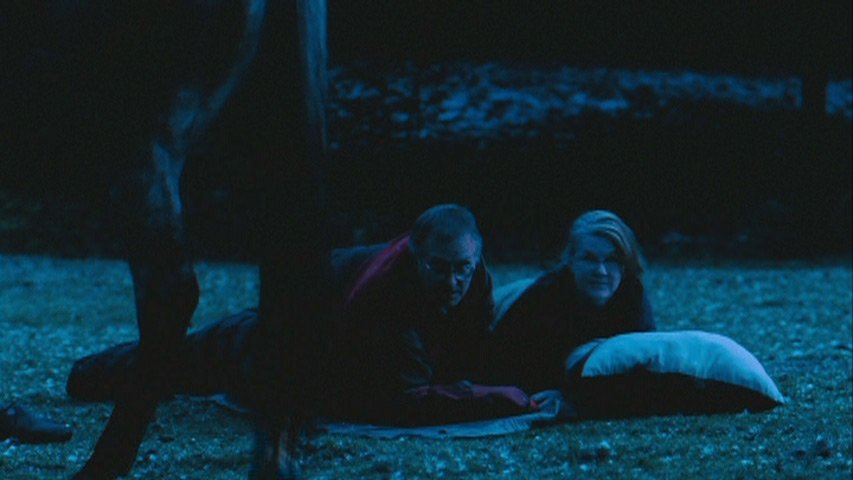
In 2007, a documentary film titled Zoo addressed the case directly, bringing it to an additional audience and extending public discussion beyond news coverage. The film added a layer of cultural commentary that kept the case in circulation longer than a typical news event.
None of this made Pinyan a celebrity in any traditional sense. The attention was directed at the incident, the legal questions, and the broader social issues. His personal history remained largely outside the spotlight.
How Washington Law Changed After Pinyan’s Death
The most concrete and lasting public consequence of the Enumclaw case was legislative. The case directly exposed a gap in Washington state law, and lawmakers responded.
Washington subsequently passed legislation criminalizing sexual contact with animals. The law also addressed related conduct, including the distribution of recordings depicting such contact. The Enumclaw case is frequently cited as the event that made this legal gap impossible to ignore.
Before Pinyan’s death, prosecutors looking at the situation had limited legal tools available. The new law gave authorities a clearer basis for prosecution in future cases involving similar conduct.
This legislative outcome is the part of the case that has the most direct, documented impact on public policy. It is also the aspect most clearly tied to the public record rather than to unverifiable personal details or online speculation.
A Note on Genealogy Information Circulating Online
Searches for Kenneth Pinyan sometimes return genealogy results from platforms like MyHeritage. These entries may list parents, grandparents, spouses, or children. It is important to understand how that information gets there.
Genealogy platforms generally allow members to submit their own family-tree data. That data is not independently verified by the platform. A profile listing a person’s relatives could have been uploaded by a private user working from incomplete or inaccurate information.
To treat any genealogy entry as confirmed fact, you would need supporting primary records. Those might include birth certificates, marriage records, census filings, or official obituaries. Without those, the information is unconfirmed, regardless of how detailed the genealogy profile appears.
For public policy research, journalism, or simply trying to understand who Kenneth Pinyan was, genealogy submissions are a weak source. Stick to established news reporting and publicly documented records where they exist.
If you are researching other public figures or historical cases and want guidance on evaluating sources, Startbusinessbase offers resources that cover research and documentation practices in plain language.
Putting the Record in Perspective
Kenneth Pinyan was not a public figure. He was a Boeing engineer from Gig Harbor who became the subject of national news coverage because of the unusual and tragic circumstances of his death at age 45.
The documented facts are relatively few: his birth and death dates, his employer, his location, the medical cause of death, the involvement of an associate named James Tait, and the legislative response in Washington state. Everything else circulating online should be evaluated carefully against that small, verifiable core.
The case matters in a public sense because it changed state law and because it raised real questions about internet subcultures, animal welfare, and the limits of existing legal frameworks. Those questions have ongoing relevance. The sensationalized retellings that surround them largely do not add anything useful to that discussion.
If you encounter accounts of this case that include detailed family histories, specific quotes, or elaborate personal narratives about Pinyan, it is worth asking what primary source those claims are actually drawn from. In most cases, the honest answer is that no strong primary source exists for those details.
Read Also: